The Medical Case for Continuous Fresh Food at Sea

By Gilly Kinsky, VP Marketing, Agwa
For decades, the maritime industry has treated onboard catering primarily as a logistical problem. The goal was simple: load enough calories to sustain the crew until the next port. But as our understanding of seafarers nutrition evolves, a new consensus is emerging among HR and procurement leaders. Simply providing calories is no longer enough. The real challenge is ensuring the nutritional quality of those calories.
The logistical reality of transoceanic voyages makes this difficult. Fresh vegetables typically degrade within the first five to seven days at sea. Once they are gone, crews rely heavily on frozen, canned, and processed alternatives for the remainder of the journey. As a result, the overall diet onboard ships becomes unbalanced, often lacking essential nutrients such as fiber and fresh greens.

The data is clear. Studies show that seafarers’ diets are often high in fat, sugar, and calories, increasing the risk of obesity, metabolic syndrome, and cardiovascular disease. In fact, research indicates that a large majority of seafarers do not consume enough fiber, highlighting a significant nutritional gap.

This gap is not just a medical issue. It is an operational risk. Poor nutrition directly affects cognitive performance, increases fatigue, and reduces overall alertness. In a high stakes environment like maritime operations, this can lead to errors and compromise safety. We cannot expect optimal performance from a crew if their primary fuel is highly processed, low quality food.
The industry is beginning to recognize this. Initiatives such as the Food4Seafarers project emphasize that proper nutrition is not a luxury, but a necessity for crew wellbeing. There is a growing understanding that crew health, morale, and performance are closely linked to consistent access to fresh, nutritious food.
The challenge, however, remains logistical. Traditional supply chains cannot provide fresh produce throughout long voyages. As long as vessels depend on periodic resupply, the nutritional gap will persist.
The solution is not to place more pressure on ship cooks or significantly increase catering budgets. The solution is to remove the limitation altogether. By enabling continuous production of fresh vegetables onboard, vessels can ensure a stable supply of nutritious food regardless of voyage length.

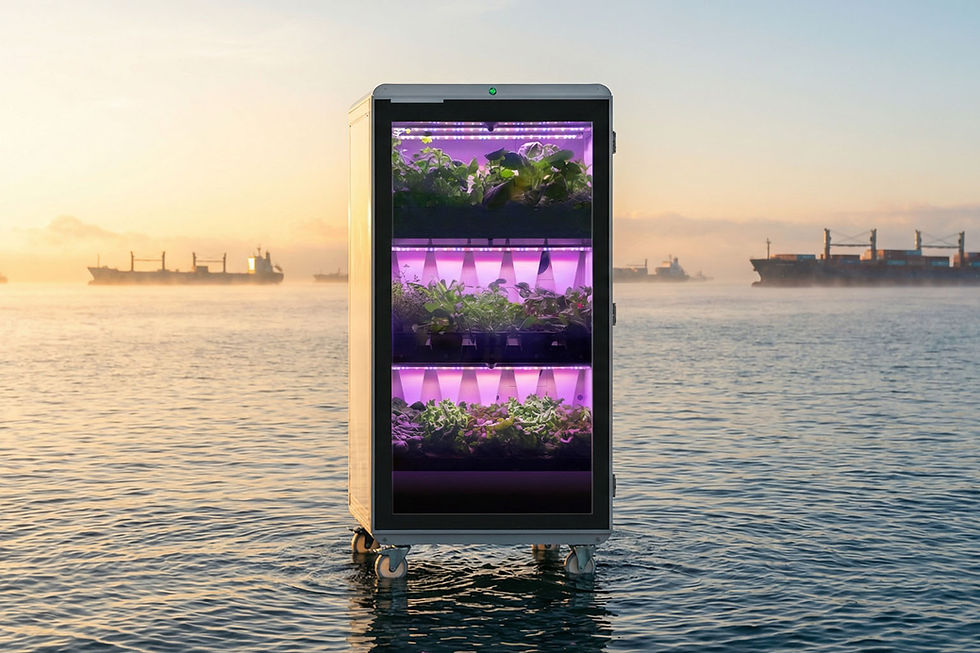
Agwa autonomous growing systems allow ships to grow fresh, crisp vegetables onboard with minimal crew involvement. This approach shifts the model from food storage to food production, ensuring that fresh greens are always available.
By doing so, operators can move beyond simply counting calories and begin providing real nutrition. The result is healthier crews, improved morale, and stronger operational performance across the fleet. Fresh food at sea is no longer a luxury. It is becoming a fundamental component of modern maritime operations.
Some interesting articles to learn more about nutrition and health of seafarers: