Seafarer nutrition: Why fresh food at sea matters more than ever
For most seafarers, fresh food runs out within the first one to two weeks at sea. What follows is not just a change in diet, but a gradual shift in energy, health, and overall wellbeing.

Food is one of the few constants in life onboard. It structures the day, creates routine, and offers familiarity in an otherwise demanding and often isolated environment. Yet the quality of that food follows a predictable pattern. Fresh produce is loaded at port, consumed early in the voyage, and then gradually replaced by frozen or processed alternatives.
This is not a failure of planning, but instead is a structural limitation of operating at sea.
The challenge of fresh food at sea
Fresh vegetables are highly perishable. Their nutritional value begins to decline soon after harvest, and by the time they are transported, stored, and served onboard, much of their original quality has already been lost.
Even the most efficient supply chains struggle to overcome the constraints of time, distance, and storage. The result is a consistent gap in access to fresh, nutrient-rich food throughout the majority of a voyage.
This gap directly shapes how crews feel and function over time.
The cumulative impact on crew health and performance
Nutrition is often treated as a background consideration in maritime operations, but its effects are continuous and cumulative.

Over time, onboard diets tend to become higher in calories and lower in fresh, nutrient-rich ingredients. This contributes to well-documented health trends among seafarers, including increased risks of obesity, cardiovascular disease, and metabolic conditions.
There is also growing evidence linking diet to mental wellbeing. High consumption of ultra-processed foods has been associated with an increased risk of depressive symptoms, reinforcing the connection between what people eat and how they feel day to day.
These effects are rarely immediate. Instead, they appear gradually in energy levels, concentration, mood, and overall resilience. With long hours, complex operations, and extended periods away from home, these shifts can have a measurable impact on performance and decision-making.
More than nutrition: The daily experience at sea
Fresh food is not only about physical health. It shapes the everyday experience of life onboard.
In an environment defined by steel, machinery, and repetition, fresh ingredients introduce contrast. Taste, texture, and colour become reminders of life onshore.
Crews consistently highlight the difference this makes. Fresh meals bring variety back into daily routines, create moments of enjoyment, and encourage interaction. Over time, these moments influence morale, onboard culture, and how seafarers experience long periods at sea.
In a setting where routines rarely change, even small improvements can have an outsized effect.
A more consistent approach to fresh food onboard
If the limitation is structural, the response must be as well.
Advances in onboard growing technology are beginning to change how fresh food is supplied at sea. Rather than relying solely on periodic resupply, vessels can now produce fresh vegetables onboard, creating a constant source of nutrition throughout a voyage.

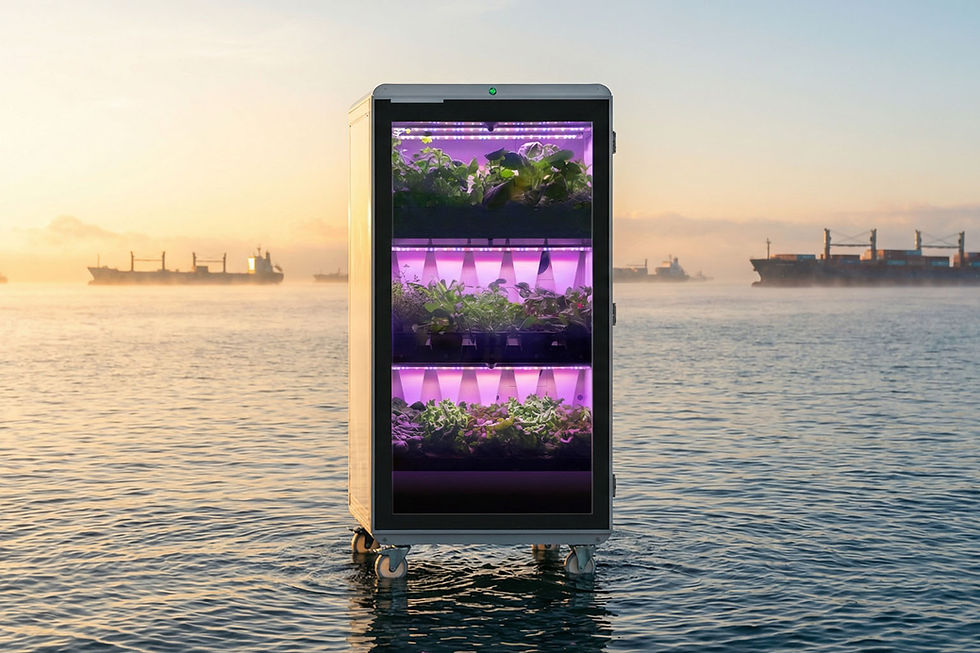
Solutions such as Agwa enable crews to grow fresh, chemical-free greens directly on the vessel with minimal crew input. Autonomous systems manage light, water, and nutrients, ensuring consistent output regardless of route or climate.
This shifts the model from delayed consumption to immediate access. Vegetables are harvested at the point of use, preserving nutritional value while reducing dependence on volatile supply chains.
Raising the standard for life at sea
Expectations around crew welfare are evolving. Access to nutritious, high-quality food is increasingly seen as a fundamental part of life onboard.
At the same time, recruitment and retention pressures are reshaping how operators think about the seafarer experience. For a new generation entering the industry, quality of life is not secondary. It is central to how long-term careers at sea are evaluated.
In this context, nutrition is no longer a peripheral issue. It is part of a broader shift toward more sustainable and human-centred maritime operations.
Improving life at sea does not always require complex change. In many cases, it begins with something simple: making fresh, nutritious food available year-round.